Termite control in Morgan Hill, CA means dealing with two very different termites, and telling them apart is the whole job. Subterranean termites live in the soil and tunnel up into your home through mud tubes, while drywood termites live entirely inside the wood with no soil contact at all. They call for different treatments, so the first thing a local termite pro does is confirm which one you have. One call gets that inspection started.
Both are common here for good reason. The valley's older homes near downtown and along Monterey Road have decades of settling cracks, crawl spaces, and original framing that give subterranean termites easy access from the ground. Drywood termites, meanwhile, ride in on the coastal air that moves through the South Bay and infest attic framing, eaves, and window trim directly. A home can have both at once, which is exactly why a guess is not good enough.
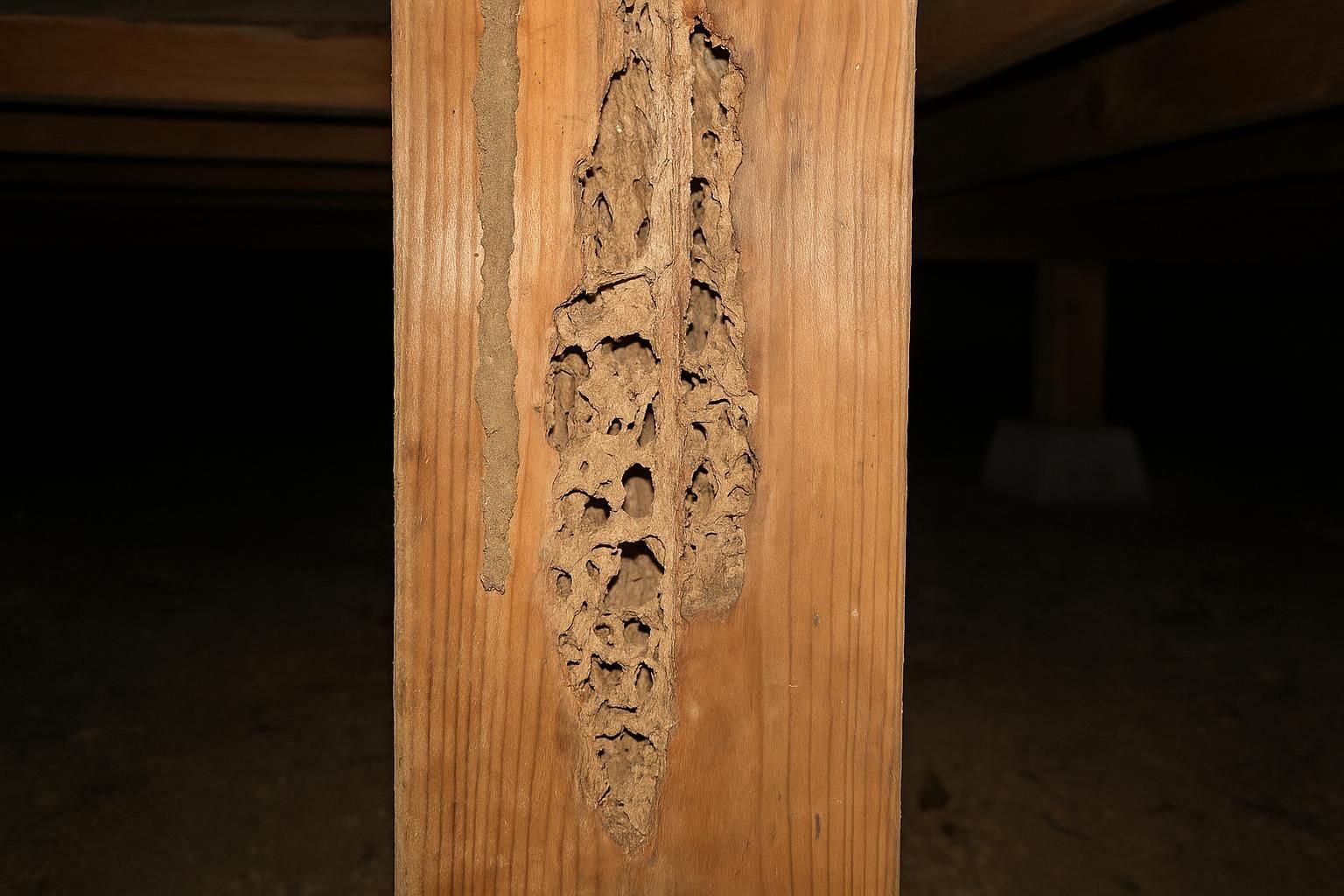
Subterranean vs. drywood termites
The signs tell you which termite you are fighting, and they point to very different treatments.
- Subterranean termites build pencil-width mud tubes up foundations, piers, and slab edges. They swarm on warm spring afternoons, leaving discarded wings near windows. They need soil moisture, so leaks and damp crawl spaces feed them.
- Drywood termites leave small piles of frass, hard pellets that look like coffee grounds or sand, beneath the wood they are eating. They infest dry attic framing, trim, and furniture with no connection to the ground.
- Both hollow out wood from the inside, so floors, trim, or door frames can sound hollow or feel soft long before you see the insect itself.
How local pros treat each type
For subterranean termites, the standard approach is a liquid termiticide barrier in the soil around and under the structure, sometimes paired with in-ground bait stations that the colony shares and carries back underground. This protects the points where they enter from the soil.
For drywood termites, treatment depends on how widespread it is. A contained infestation in a section of trim or framing can be handled with localized treatments like wood injection or spot treatment. A heavy, whole-structure drywood infestation may call for fumigation, where the home is tented and treated all at once. A local pro inspects, scopes the spread, and recommends the least invasive option that actually clears it, rather than defaulting to the most expensive one.
Why a yearly inspection pays off here
Termites are quiet. By the time most homeowners notice damage, the colony has been working for months or years. Because Morgan Hill's housing stock and climate favor both termite types, a yearly inspection is the cheapest insurance you can buy on your biggest asset. The dry winter is actually the best time to schedule one, when activity is low and the pro can work methodically through the crawl space and attic.
If you are buying or selling a home in the valley, a termite inspection is usually part of the deal anyway. Getting ahead of it on your own timeline beats discovering an active colony during escrow.
Get termite control in Morgan Hill
One call gets you a local exterminator who handles termite control for Morgan Hill and the surrounding valley. You get an honest read on the problem, an upfront price, and treatment that targets the source. The phone line is answered 24/7, and same-day or next-day visits are often available.